English
  Spanish
  Portuguese
  Arabic
  Russian
  简体中文
简体中文 

 Location:
 How to Choose the Right Outdoor Fiber Optic Cable for Directly Buried and Pipeline Networks
 Update Time:2026-04-09
 Traffic:
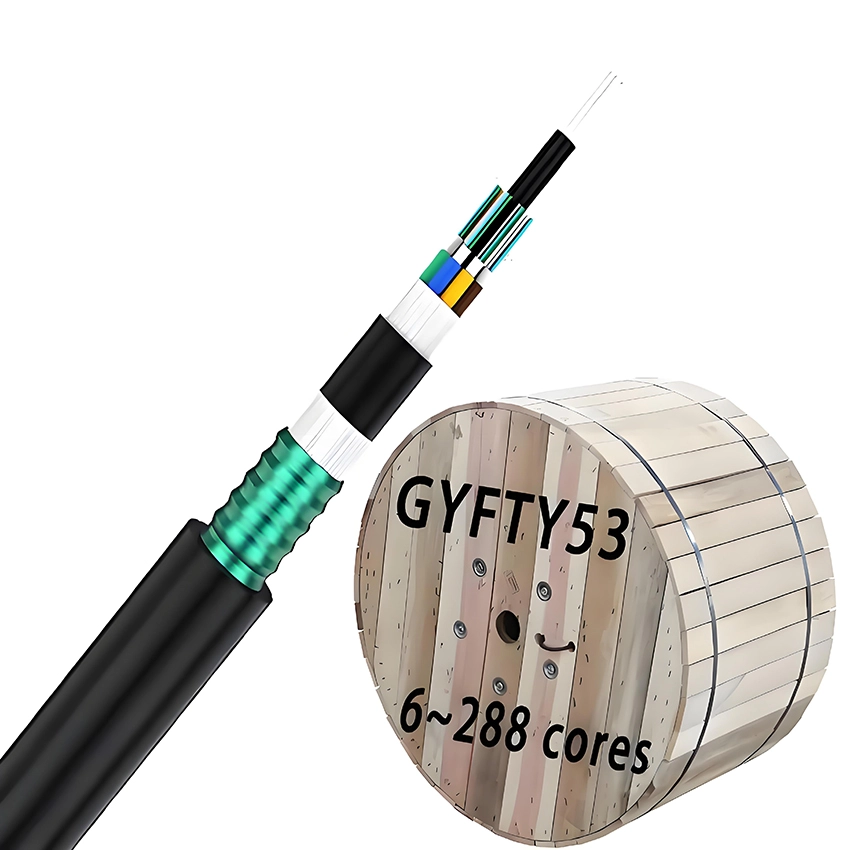
When planning an outdoor optical network, one of the most important decisions is to choose a cable structure that can handle the actual installation environment. Moisture underground, soil pressure, mechanical stress during installation, and long-term exposure to temperature changes can all affect the reliability of the cable. Therefore, project contractors and network builders often look for cables that provide both stable transmission and strong physical protection. GYFTY53 is one such outdoor armored cable designed for these demanding applications. It is suitable for direct burial, pipeline, and overhead installations, and supports 2 to 144 fibers to meet different network capacity requirements.
Why choose GYFTY53 cable?
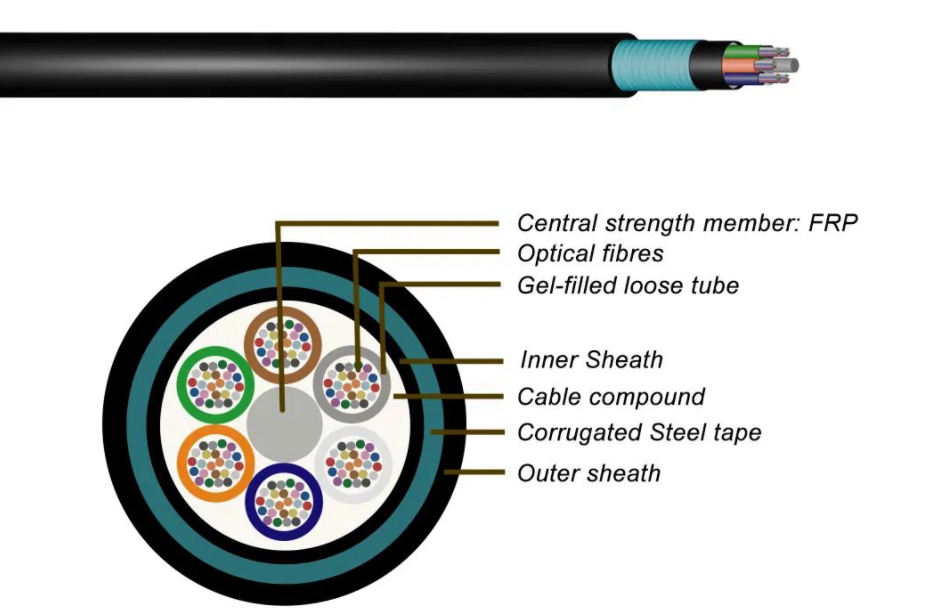
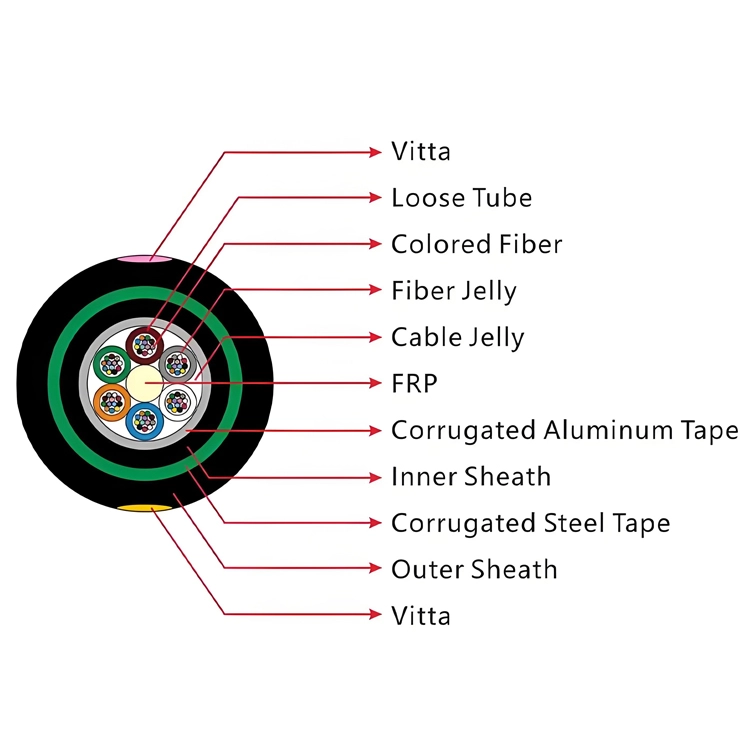
The main cause of premature failure of outdoor fiber optic cables is not the fiber itself, but its inadequate protection against waterproofing and external force action. In harsh environments, standard cable construction may not provide adequate resistance to compression, moisture, or installation tension. The structural design of GYFTY53 is designed to address these challenges by combining loose tubing filled with waterproofing compounds, non-metallic FRP center reinforcements, water-blocking materials, corrugated steel belt armor, and PE outer sheath. This layered design helps improve waterproofing while enhancing compression resistance and mechanical stability.
How does GYFTY53 adapt to different cable application scenarios?
For direct-buried projects, cable protection is particularly important because the cable can withstand underground pressure for a long time. If the structural strength is insufficient, soil pressure, moisture, and external shocks from construction activities can shorten the cable life. According to the product page, GYFTY53 is a high-performance waterproof and pressure-resistant direct-buried cable, making it ideal for municipal communication lines, industrial infrastructure, utility corridors, and rural broadband deployments.
For plumbing applications, engineers often need a cable that performs well during laying and maintains reliability for a long time in enclosed outdoor passageways. GYFTY53 is also suitable for plumbing installations, meaning it can be used in urban communication systems, campus backbone networks, and integrated infrastructure lines where cables must pass through protective pipes or conduits. Since the product is also suitable for overhead applications, it provides project planners with greater flexibility when a single network requires multiple installation methods in different areas.
How is the internal structure of GYFTY53 waterproof? What is its mechanical strength?
Another important factor in choosing an outdoor fiber optic cable is its internal structure. The fiber of GYFTY53 is placed inside a high modulus plastic loose tube filled with a compound that protects the fiber. The loose tube is resistant to hydrolysis, which is especially important for humid environments. The manufacturer has taken waterproofing measures around the fiber optic cable core and fully filled the cable core to reduce the risk of water infiltration. This is a practical advantage for outdoor communication projects, as long-term environmental stability is just as important as initial installation performance.
Mechanical strength is another reason why this cable is suitable for outdoor deployment. The product has good mechanical and temperature properties, while being both compressive and flexible. The technical data table shows the different specifications of the cable, covering various core numbers, and lists short-term and long-term tensile strength and compressive strength values for various configurations. For buyers, this provides a clearer basis for them to choose the right specifications based on wiring conditions, expected stresses, and operating requirements during installation.
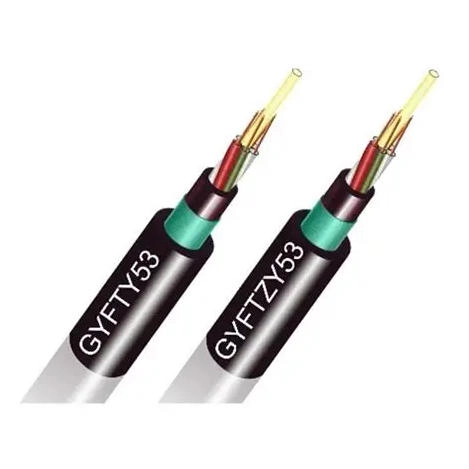
In modern network projects, flexibility in core count is also critical. Some outdoor links require only a small amount of fiber for access or monitoring systems, while backbone or scalable infrastructure lines may require higher capacity. GYFTY53's core count ranges from 2 to 144, making it suitable for communications projects of all sizes. This range allows contractors, distributors and end users to choose models that meet current needs and reserve space for future expansion.
From a quality and compliance perspective, the product page states that GYFTY53 is compliant with YD/T 901-2009 and IEC 60794-1 standards. For international buyers, EPC general contractors, and engineering procurement teams, compliance with standards is an important indicator of product consistency and manufacturing control. It also simplifies communication when discussing technical specifications with project owners or consultants.
In fact, GYFTY53 is a good choice when a project requires an outdoor cable that combines water resistance, structural strength and installation flexibility. Buyers should not choose a cable based solely on price or the number of fibers, but should consider whether the cable is designed for the actual wiring environment. Optical cable with proper water resistance