English
  Spanish
  Portuguese
  Arabic
  Russian
  简体中文
简体中文 

 Location:
 What is an Optical Fiber Terminal Box
 Update Time:2025-12-25
 Traffic:
1. What is Terminal Box
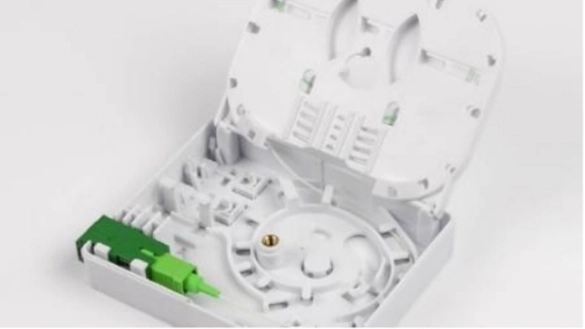
The Fiber Termination Box (FTB) is a crucial component in optical networks, designed for terminating, connecting, and managing fiber cables. Its key advantage lies in providing a cost-effective and efficient solution for cable fixation, splicing, and mechanical fiber protection.
Additionally, the FTB is designed for straightforward installation and maintenance. Featuring a user-friendly layout and removable components, it enables rapid deployment while simplifying troubleshooting and routine upkeep—thereby reducing both operational time and costs.

2. Types of FTB
Fiber Termination Boxes (FTBs) are available in various types, categorized by several key factors:
By Cable Connection Method:
Straight-through Terminal Box:Features a single entry/exit port for the incoming cable.
Branched-type Terminal Box:Contains multiple ports for distributing the incoming cable.
By Fiber Capacity (Fusion Configuration):
Models are specified by their input/output fiber count, such as 2 in/8 out, 4 in/24 out, 4 in/12 out, etc.
By Shell Material:
Available with either aplastic shellor ametal shell.
By Installation Style:
Common styles includerack-mount/drawer,wall-mounted,desktop, and other configurations.
By Application Environment:
Indoor Fiber Termination Box:A compact fiber management solution designed for installation in small to mid-sized multi-dwelling units (MDUs) or multiple tenant units.
Outdoor Fiber Termination Box:Designed for external deployment in small and medium-sized multi-tenant or multi-dwelling units.
3. Core functions of fiber optic terminal boxes
The following details the core functions of the Fiber Termination Box, which include splicing and protecting optical fibers, along with its critical role in optical path distribution and management.
Fiber optic splicing and protection:
(1) Fiber Optic Splicing:
The Fiber Termination Box facilitates key cable functions including input, branching, and splicing.
It enables quick optical fiber connection and repair via integrated adapters and splice trays.
(2) Fiber Optic Protection:
The enclosure shields internal fiber optic connectors from external environmental damage.
It provides various protection levels such as dustproof, moisture-proof, and shock-resistant to ensure reliable fiber connectivity.
(3) Performance Management:
The termination box can be equipped with monitoring modules for parameters like optical power and return loss.
This allows for real-time monitoring and management of optical transmission performance.
Optical path allocation and management:
(1) Optical Path Allocation:
It is equipped with fiber inlet and outlet ports to enable optical path branching and aggregation.
Supports rapid connection and allocation of fiber cables, enhancing network deployment flexibility.
(2) Fiber Management:
Includes dedicated fiber storage and securing components, such as splice trays and cable ducts.
Effectively organizes and manages fiber cables to prevent tangling and excessive bending.
(3) Maintenance Convenience:
The termination box offers centralized fiber access points, simplifying network maintenance and upgrades.
In summary, as a critical device in fiber optic network deployment, the fiber termination box plays a vital role in fiber splicing, protection, and optical path distribution and management. It ensures both the reliability and flexibility of the fiber network, providing solid support for the stable operation of the entire system.