English
  Spanish
  Portuguese
  Arabic
  Russian
  简体中文
简体中文 

 :
: Fire-Resistant Fiber Optic Cable: A Complete Safety Guide
 :2026-01-30
 :
:
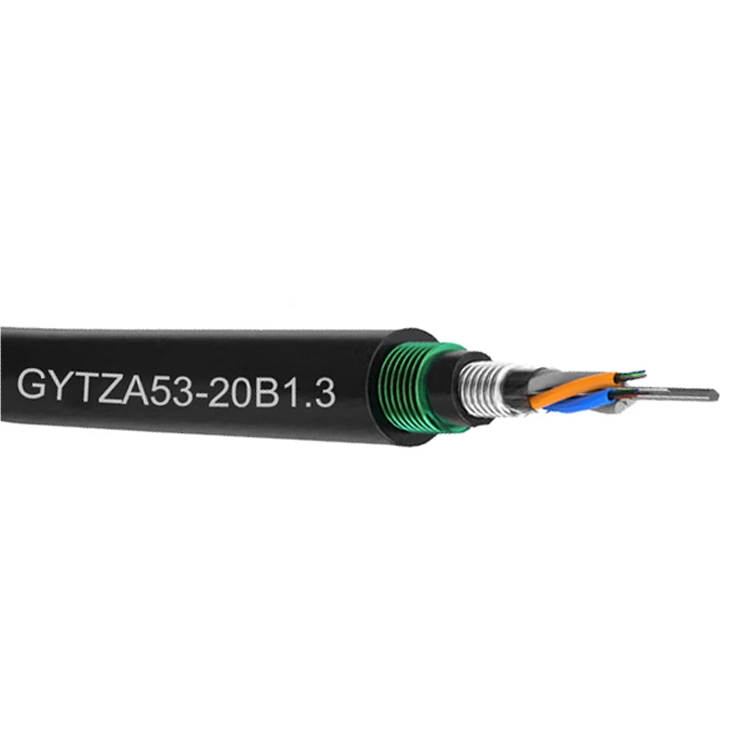
In environments where fire safety is paramount, standard fiber optic cables can pose a significant risk. Fire-resistant fiber optic cable is engineered specifically to maintain circuit integrity, limit flame propagation, and minimize toxic smoke emission during a fire. This critical infrastructure component is essential for life safety systems, emergency communications, and continuous operations in commercial, industrial, and public buildings.
What is Fire-Resistant Fiber Optic Cable?
Fire-resistant fiber optic cable, often referred to as fire-rated, circuit integrity, or fire-survival cable, is designed to continue functioning for a specified period under direct fire conditions. Unlike standard cables with PVC or polyethylene jackets that can ignite and propagate flames, these cables use specialized materials and constructions to resist fire, heat, and moisture.
Key standards governing their performance include:
IEC 60331: Tests for fire resistance (circuit integrity).
IEC 61034: Measures smoke density.
IEC 60754: Analyzes halogen acid gas emission.
UL 1685 (FT4/FT6): Vertical-tray flame test in the U.S.
NFPA 262 (UL 910): Standard for plenum cable flame and smoke characteristics.
Types and Constructions
Fire-resistant cables come in several constructions, each suited to different safety levels and applications:
LSZH/LSOH (Low Smoke Zero Halogen):
Materials: Jackets and insulation made from halogen-free polymers like polyolefins.
Benefit: Produces minimal smoke and no corrosive/toxic halogen gases when exposed to fire, protecting equipment and aiding safe evacuation.
Plenum-Rated (CMP):
Use: Specifically for air-handling spaces (plenums) in buildings.
Benefit: Meets strict flame spread and smoke generation criteria (per NFPA 262).
Riser-Rated (CMR):
Use: For vertical runs between floors in non-plenum riser shafts.
Benefit: Prevents fire from traveling rapidly up cable pathways.
Mineral Insulated (MI) Cable:
Construction: optical fibers housed within a seamless copper tube filled with compacted magnesium oxide powder.
Benefit: Offers the highest level of fire resistance (often 2+ hours), is impervious to moisture, and extremely durable. Commonly used in critical and high-hazard areas.
Key Features and Advantages
Maintained Circuit Integrity: Ensures emergency systems (alarms, PA, exit lighting) remain operational during a fire.
Flame Retardancy: Significantly slows or prevents the spread of flame along the cable.
Low Smoke & Toxicity: LSZH materials reduce obscuring smoke and eliminate corrosive gases that can damage electronics and harm humans.
Compliance: Meets stringent local and international building and fire safety codes.
Durability: Often features robust construction suitable for harsh environments beyond just fire risk.
Critical Applications
Fire-resistant fiber optic cable is non-negotiable in applications where communication and data integrity are linked to life safety and asset protection:
Life Safety Systems: Fire alarm networks, emergency voice communication systems, and public address systems.
Critical Infrastructure: Nuclear plants, power generation facilities, petrochemical plants, and transportation hubs (tunnels, airports, subways).
High-Rise Buildings: Backbone cabling for data, voice, and video between floors in risers and plenums.
Data Centers: Connecting firewalls, monitoring systems, and ensuring core network links remain active during an incident.
Industrial Automation: In manufacturing plants where cable runs are near high-heat processes or machinery.
Installation and Selection Considerations
Know the Code: Always comply with National Electrical Code (NEC/NFPA 70), local building codes, and authority having jurisdiction (AHJ) requirements for cable ratings (CM, CMR, CMP, etc.).
Define the Hazard: Select the cable type based on the specific threat (e.g., general flame retardancy vs. 90-minute circuit integrity for a tunnel).
Environmental Factors: Consider moisture, crush resistance, and UV exposure if used outdoors in conjunction with fire resistance.
Handling: While robust, some fire-resistant cables (like MI) have specific bending radius and termination procedures that must be followed.
Documentation: Keep all certification and test reports (from UL, ETL, etc.) on-site for inspection and verification.
Fire-Resistant vs. Standard OFC: Why the Difference Matters
In a fire, a standard cable's jacket can become fuel, rapidly spreading flames and emitting thick, toxic smoke. This can lead to system failure within minutes, crippling emergency response. A fire-resistant cable is designed to be part of the solution, not the problem, by containing the threat and preserving functionality.
Conclusion
Choosing the correct fire-resistant fiber optic cable is a critical decision that impacts the safety of occupants, first responders, and the continuity of critical operations. It is an investment in risk mitigation and regulatory compliance. When designing networks for buildings, industrial facilities, or public infrastructure, prioritizing cables with the appropriate fire performance ratings is not just a technical specification—it's a fundamental safety requirement.
FAQS
Q: What does LSZH stand for, and why is it important?
A: Low Smoke Zero Halogen. It's crucial because in a fire, these cables produce very little obscuring smoke and no corrosive/toxic halogen gases, which protects both people and sensitive equipment.
Q: Can I use a riser-rated (CMR) cable in a plenum space?
A: No. Plenum spaces (air-handling spaces above ceilings or below floors) require the stricter plenum-rated (CMP) cable. Using a lower rating violates building codes.
Q: How long can fire-resistant cables last in a fire?
A: It varies by construction. Standard LSZH cables provide flame retardancy. Certified circuit integrity cables (e.g., to IEC 60331) are tested to maintain functionality for a defined period, such as 30. 60. 90. or 120 minutes.
Q: Are fire-resistant fiber optic cables more expensive?
A: Yes, they typically cost more than general-purpose cables due to specialized materials and manufacturing processes. However, this cost is minimal compared to the potential loss of life, property, and liability in a fire incident.
Q: Where is Mineral Insulated (MI) cable typically used?
A: In the most critical and high-hazard applications, such as nuclear facilities, offshore platforms, long tunnels, and high-rise building core systems, where maximum fire integrity and durability are required.